

Did You Know
Earth’s Hidden Treasure: Gold in the Core.
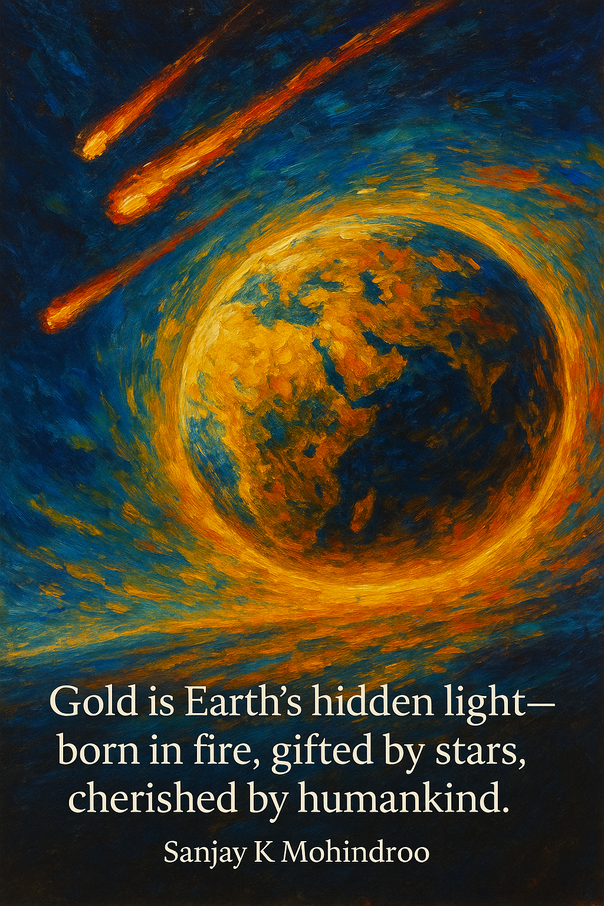
Sanjay Mohindroo
Most of Earth’s gold lies in its core, locked away forever. What remains near us tells an inspiring story of cosmic gifts.
A Radiant Beginning
Gold’s Journey into Earth’s Core
Gold has always carried a glow that inspires human imagination. We craft it into jewelry, crowns, and coins. We use it in satellites, computers, and medical devices. Yet the truth is, the gold we see around us is only a tiny fraction of what Earth holds.
Billions of years ago, when our planet was molten, gravity pulled heavy elements inward. Gold, along with iron, platinum, and nickel, sank deep. This process, called geological differentiation, sealed away most of Earth’s gold in the core. Scientists believe that over 99% of Earth’s total gold rests far below us, unreachable forever. #EarthScience #GoldFacts
Seeds from the Sky
Meteorites as Cosmic Messengers
If nearly all gold sank into the core, why do we still find it in our crust and mantle? The answer lies in the skies. After Earth’s core formed, meteorites rained down. These cosmic bodies carried precious metals, including gold and platinum.
Scientists call this event the Late Heavy Bombardment. During this violent period, meteorites seeded Earth with accessible gold. The jewelry we wear today and the circuits in our devices carry this cosmic origin story. In a sense, gold is both a child of Earth and a gift from space. #Meteorites #CosmicOrigins
A Planet Coated in Gold
The Astonishing Thickness of Earth’s Hidden Layer
Geologists have tried to imagine just how much gold exists on Earth. An older study from the University of Bristol once estimated that if all the gold on Earth were spread evenly across its surface, the planet would be coated with a layer about 4 meters thick.
Pause for a moment and picture that. A golden Earth, gleaming like the sun, plated in a radiant skin of wealth. It’s an image at once surreal and inspiring. It reminds us of the abundance hidden below, even if locked away beyond reach. #Geology #GoldenEarth
Gold’s Dual Identity
Symbol of Beauty and Tool of Progress
Gold shines not only as an ornament but also as technology. Its resistance to corrosion makes it vital for space exploration. Satellites use gold coatings to reflect heat. Circuit boards rely on their conductivity. Surgeons employ it in medical devices.
This dual role reflects gold’s unique identity. It is both a symbol of timeless beauty and a key driver of modern progress. Its cosmic journey gave it rarity, but its properties gave it purpose. #Technology #Innovation
The Human Connection
Gold as Culture, Power, and Inspiration
From ancient tombs to Olympic medals, gold is stitched into human history. Civilizations measured wealth and power in golden artifacts. Poets compared love to its shine. Rulers forged crowns to show divine right.
Even today, gold inspires dreams. It carries a promise of beauty, endurance, and excellence. When we hold it, we touch not only a mineral but also a story stretching from the birth of Earth to human imagination.
Gold reminds us that value is more than rarity—it is meaning. #Culture #History
Lessons from Earth’s Treasure
What Gold Teaches Us About Perspective
Gold’s journey tells us that some treasures will remain beyond reach. The core’s hidden riches cannot be mined, no matter how advanced we become. And that is fine. Its inaccessibility gives us perspective.
What we do have is precious because it is rare, because it carries a story of cosmic delivery. It teaches us gratitude for what exists and patience for what cannot be grasped. It is a lesson in wonder: the universe often gives, but also hides, to remind us of limits. #Inspiration #Perspective
A Glow that Guides
Gold’s story inspires not just scientists and miners but all of us. It tells us about Earth’s fiery birth, cosmic collisions, and human imagination. It is both science and poetry.
Every time you see gold, you see more than metal. You see the core of Earth, the gift of stars, and the brilliance of human craft. That glow has traveled through time, across space, and into your hand.
In gold, Earth reminded us that beauty lies in both abundance and rarity. And that, perhaps, is the true treasure. #Hope #EarthScience
✈️ Every Three Months, Americans Throw Away Enough Aluminum to Build the Entire Commercial Air Fleet.

Sanjay Mohindroo
Every three months, America’s landfills enough aluminum to rebuild its air fleet. Here’s why it matters and why hope shines bright.
A Fact That Stops Us Mid-Thought
Aluminum in the Trash, Planes in the Sky
Every three months, Americans throw enough aluminum into landfills to build our nation’s entire commercial air fleet. It sounds like exaggeration, but it’s not. Think of thousands of aircraft—shiny, powerful, and heavy with metal. That much aluminum is tossed away in just ninety days.
This statistic does more than shock. It makes us ask: if aluminum is so precious, why do we treat it like disposable trash? #Sustainability #RecyclingMatters
Why Aluminum Is a Wonder Metal
Light, Strong, and Endless in Use
Aluminum isn’t just another metal. It’s light but strong. It resists rust. It conducts electricity. It’s in soda cans, airplanes, cars, laptops, and satellites.
Here’s the magic: aluminum is 100% recyclable without losing strength. A recycled can becomes a new can in just 60 days. And yet, huge amounts end up in landfills, buried instead of reborn.
That’s like throwing away gold but calling it scrap. #Aluminum #Recycle #CircularEconomy
The Air Fleet Comparison
Why This Example Hits Hard
Why compare aluminum waste to airplanes? Because planes are symbols of progress and pride. America’s commercial fleet includes thousands of aircraft, each a masterpiece of engineering. To say we landfill enough aluminum to rebuild them every quarter paints a clear picture of waste.
It shows scale in terms we understand. It makes us imagine potential, not just loss. #Aviation #Innovation
The Missed Potential of Recycling
What We Could Gain Instead
Throwing aluminum into landfills wastes energy, money, and opportunity. Recycling aluminum saves up to 95% of the energy needed to produce it from raw ore. Every can recycled cuts emissions and reduces mining.
If every American recycled just one more can a day, billions of extra cans would stay out of dumps. That translates into cleaner skies, lower costs, and new products. #ClimateAction #GreenLiving
Why So Much Waste?
Convenience vs Awareness
The problem isn’t that we lack recycling systems. It’s that convenience often beats awareness. A can tossed into a trash bin instead of a recycling bin becomes landfill waste.
Packaging, single-use lifestyles, and low incentives feed the problem. But here’s the positive side: habits can shift quickly when people see impact. Think of the surge in reusable bottles, bags, and composting. Change spreads once people connect to meaning. #EcoAwareness #EveryActionCounts
Hope in Progress
What’s Already Working
It’s not all bad news. America already recycles billions of aluminum cans every year. States with deposit-return schemes report recycling rates of 70–90%. Major brands are shifting to recycled materials. Communities are investing in smarter recycling plants.
The air fleet fact isn’t a sentence—it’s a wake-up call. It tells us how much more we can save if effort multiplies. #RecyclingSuccess #GreenFuture
From Landfill to Legacy
Imagining a Different Future
Imagine if the aluminum in landfills today had been recycled. We would see fewer mines dug into mountains. We would see fewer greenhouse gases in the air. We would see cities thriving on circular systems that waste nothing.
And imagine if every three months, instead of burying enough aluminum to build a fleet, we actually rebuilt one in recycled form. That’s the kind of legacy worth leaving. #CircularEconomy #Hope
Aluminum as a Teacher
Lessons Beyond Metal
Aluminum teaches us about cycles. It reminds us that nothing needs to be “thrown away.” What we call waste is often raw material for tomorrow.
In many ways, aluminum is a mirror. It shows how easily we can waste value, but also how simple it is to save it. It gives us a choice: landfill or renewal. #LifeLessons #InspirationFromNature
Small Steps with Big Weight
Why Individuals Matter
It’s easy to think that one doesn’t matter. But when multiplied by millions, it does. Each recycled can reduce demand for mining, energy, and emissions. Each choice sends a message to industries and governments.
One can, one choice, one moment—it all adds up. That’s the joy of recycling: small actions carry immense weight. #ActNow #SmallStepsBigImpact
From Trash to Triumph
Every three months, America throws away enough aluminum to rebuild its air fleet. That’s shocking. But it’s also motivating. It tells us the opportunity is massive.
Aluminum doesn’t wear out. It waits for us to respect it, to recycle it, to give it life again and again.
So let’s not bury tomorrow’s airplanes. Let’s keep the metal flying, shining, and serving. #RecycleToday #BrightFuture
☕ Americans Throw Away 25 Trillion Styrofoam Cups Every Year: Turning Waste Into Possibility.

Sanjay Mohindroo
Americans discard 25 trillion Styrofoam cups each year. This fact shocks, but it also inspires action, innovation, and hope.
A Number Too Big to Imagine
Trillions in the Trash
Every year, Americans throw away 25 trillion Styrofoam cups. Yes, trillion—not million, not billion. Trillions. That’s more cups than stars you can see on a clear night.
Picture it: mountains of cups stacked higher than skylines, filling landfills, floating in rivers, and blowing across streets. This number stops us in our tracks. But it also sparks a deeper thought: how can we turn this waste into opportunity? #Sustainability #StyrofoamWaste
Why Styrofoam Stays Forever
Light in Hand, Heavy in Impact
Styrofoam—technically known as polystyrene foam—feels light and harmless—a hot coffee cup, a soup bowl, a takeout container. But what makes it useful also makes it harmful.
It doesn’t break down for hundreds of years. It resists recycling. It breaks down into microplastics that invade soil, oceans, and food chains. One sip from a Styrofoam cup can leave a trace that lingers for centuries.
Yet, here’s the twist: knowing this gives us power. Once we see the impact, we can make better choices. #PlasticPollution #EcoAwareness
The Scale of 25 Trillion
Cups That Could Circle the Planet
How many cups are 25 trillion cups? Imagine stacking them end to end. They would wrap around the Earth thousands of times. Or picture building cities out of cups—sky-high towers stretching endlessly.
It’s a waste story written on an unimaginable scale. But scale also means potential. If even a fraction of those cups were replaced, reused, or redesigned, the impact would be massive. #WasteFacts #CircularEconomy
Convenience vs Cost
Why We Keep Using Them
Styrofoam’s appeal lies in convenience. It’s cheap, it insulates, and it’s everywhere—from diners to stadiums. People grab, sip, toss, and move on.
The hidden cost is never seen at checkout. It shows up later in polluted rivers, marine deaths, and landfill overflow. What looks cheap is actually very expensive.
But convenience doesn’t have to mean waste. We’ve already seen change with reusable bottles, metal straws, and cloth bags. Cups can be next. #EcoChange #EveryActionCounts
Small Cup, Big Carbon
Energy and Emissions Behind It
Making Styrofoam isn’t simple. It uses petroleum, heat, and chemical processes that release greenhouse gases. Each cup adds a drop to climate change. Multiply that by 25 trillion, and it’s no longer a drop—it’s a flood.
Recycling Styrofoam is technically possible, but rarely done. It costs more to recycle than to make new. That’s why most cups are thrown away.
This is not just about trash. It’s about energy, emissions, and lost chances to build better systems. #ClimateAction #CarbonImpact
Innovation Rising
Smarter Solutions Already Here
The good news: innovation is stepping in. Compostable cups made from corn, sugarcane, bamboo, and paper are spreading fast. Big chains now test reusable cup programs. Some cities ban Styrofoam food containers outright.
Technology is making recycling smarter. Startups experiment with enzymes that break plastics faster. Schools, cafes, and festivals embrace bring-your-own-cup culture.
The story isn’t only about 25 trillion cups wasted. It’s about billions of cups already saved through choice and design. #Innovation #EcoSolutions
Communities Leading the Way
When Local Action Inspires
Some of the biggest changes begin locally. Cities like New York, San Francisco, and Seattle have banned Styrofoam containers. Colleges run zero-waste cafeterias. Families swap disposables for reusables.
These shifts prove something powerful: culture changes faster than we think. What feels like a small local law today can spark national habits tomorrow. #CommunityChange #EcoLeadership
Lessons from the Cup
Seeing Beyond Waste
Styrofoam cups teach us about perspective. They remind us how small daily choices scale up. One cup is nothing. But 25 trillion cups become mountains.
The reverse is true, too. One reusable choice may seem small. But millions of people making that choice create an entirely new system.
The lesson? Never underestimate the impact of repeated action. #LifeLessons #CollectivePower
From Trash to Inspiration
Turning Facts into Fuel
Yes, 25 trillion cups are thrown away every year. But instead of despair, we can feel inspiration. That number means there’s endless room to improve, innovate, and inspire.
Imagine schools where kids design biodegradable cups. Picture companies competing to make the greenest container. See communities celebrating “zero cup waste days.”
It’s not just about stopping waste. It’s about starting joy, pride, and collective progress. #GreenFuture #EcoInspiration
One Cup, One Choice, One Future
The fact that Americans throw away 25 trillion Styrofoam cups yearly sounds overwhelming. But every overwhelming number is made of single units. Each cup is a choice. Each choice is a chance to change the story.
So let’s hold our cups differently. Let’s admire their lesson, respect their cost, and choose better. The future isn’t written by waste—it’s written by choices. And it can be bright, clean, and joyful. #Recycle #EcoHope #BetterChoices
78% of Marine Mammals Are at Risk of Choking on Plastic: A Call to Protect Ocean Giants.

Sanjay Mohindroo
🌊 78% of marine mammals face risks of choking on plastic. Here’s why it matters, what it means, and why hope shines.
A Statistic That Demands Attention
The Silent Threat Beneath the Waves
Around 78% of marine mammals are at risk of choking on plastic. Dolphins, whales, seals, and manatees—creatures that inspire awe—now face danger from our waste.
This fact shocks us because marine mammals are symbols of majesty and freedom. To imagine them struggling with plastic bags and debris is heartbreaking. Yet, within this harsh truth lies a spark: awareness creates power. #MarineLife #OceanAwareness
Why Plastic Is So Dangerous
Floating Traps in Blue Waters
Plastic is light, durable, and everywhere. But in the ocean, these traits become threats. A drifting bag looks like a jellyfish to a turtle. A floating wrapper resembles prey to a dolphin. A fishing line tangles a seal’s flippers.
Once swallowed, plastic can choke, block stomachs, or leach toxins. What starts as trash on land turns into a death trap at sea.
But this also means prevention is possible. If waste doesn’t enter oceans, it doesn’t harm. #PlasticPollution #SaveOceans
The Scale of the Crisis
Oceans Turned into Dumping Grounds
Scientists estimate that over 11 million tons of plastic enter the oceans yearly. By 2050, plastic could outweigh fish in the sea.
Marine mammals roam every ocean. They cannot avoid plastic. It floats from rivers, cities, and shipping routes into even the deepest trenches.
When we hear “78% at risk,” it is not an abstract warning. It is a daily reality for animals that should swim freely. #OceanFacts #ProtectNature
Admiring Marine Mammals
Giants Worth Protecting
Marine mammals are nature’s marvels. Whales sing songs that travel miles. Dolphins display intelligence and joy. Seals rest playfully on ice. Manatees glide like gentle giants.
They are vital to ecosystems. Whales fertilize oceans with nutrients. Seals balance fish populations. Dolphins protect coral reefs.
When plastic threatens them, it threatens the ocean balance. Protecting them is more than compassion—it’s survival. #WhaleLove #Dolphins #MarineConservation
Plastic as an Unwanted Guest
How It Sneaks into Oceans
Plastic reaches oceans in many ways:
- Litter is tossed on beaches.
- Trash washed from streets into drains.
- Fishing nets lost at sea.
- Shipping waste is dumped illegally.
It breaks into microplastics, unseen but deadly. These enter fish, mammals, and eventually humans as food. The cycle of waste circles back to us.
Yet, cycles can be broken. Reducing, reusing, and rethinking habits can stop the flow. #EcoHabits #WasteCycle
Stories That Stir the Heart
Real Faces of the Plastic Problem
Whales have been found with 80 plastic bags in their stomachs. Seals with six-pack rings around their necks. Dolphins are choking on fishing lines. These are not rare tragedies—they are growing reports.
But alongside these stories are hopeful ones: rescue teams cutting nets, volunteers cleaning beaches, children leading campaigns. For every dark headline, there is light in human response. #Hope #OceanHeroes
Signs of Progress
Change Already Happening
Many nations ban single-use plastics. Coastal communities embrace plastic-free living. Companies develop biodegradable alternatives. Campaigns like #BeatPlasticPollution inspire millions worldwide.
Recycling innovations improve yearly. Ocean cleanup projects remove tons of plastic. Laws grow stricter on dumping.
The 78% risk isn’t a fixed future. It’s a reminder of what’s possible when humans act together. #SustainableFuture #ChangeMakers
Lessons from the Ocean
What Marine Mammals Teach Us
Marine mammals are models of resilience. They migrate thousands of miles, adapt to climate shifts, and thrive in diverse seas. Their struggle with plastic is not weakness—it’s a test of our stewardship.
They remind us that the ocean is shared. It belongs to whales and dolphins as much as to us. Their risk is our responsibility. #OceanWisdom #SharedPlanet
Turning Waste into Wonder
A Future We Can Build
Imagine oceans where no plastic drifts. Picture dolphins leaping in clear waters, whales feeding without danger, and seals basking safely. That future isn’t fantasy—it’s achievable.
If 78% face risk today, we can work to make that 0% tomorrow. Each law, cleanup, and choice adds up. Every act of care plants hope in the tide. #OceanHope #BluePlanet
From Threat to Triumph
Yes, 78% of marine mammals risk choking on plastic. But that number is not destiny. It’s a call to admire these creatures more, to act with purpose, and to turn awareness into joy.
The ocean has always been a place of renewal, mystery, and beauty. With unity, respect, and small steps multiplied, it can remain that way for all beings who call it home.
Let’s not let plastic be the story of the sea. Let it be the turning point where humanity chose better. #ActNow #OceanFuture #SaveMarineLife